Do you need more swim fitness…or more efficiency?
Written by David Dew
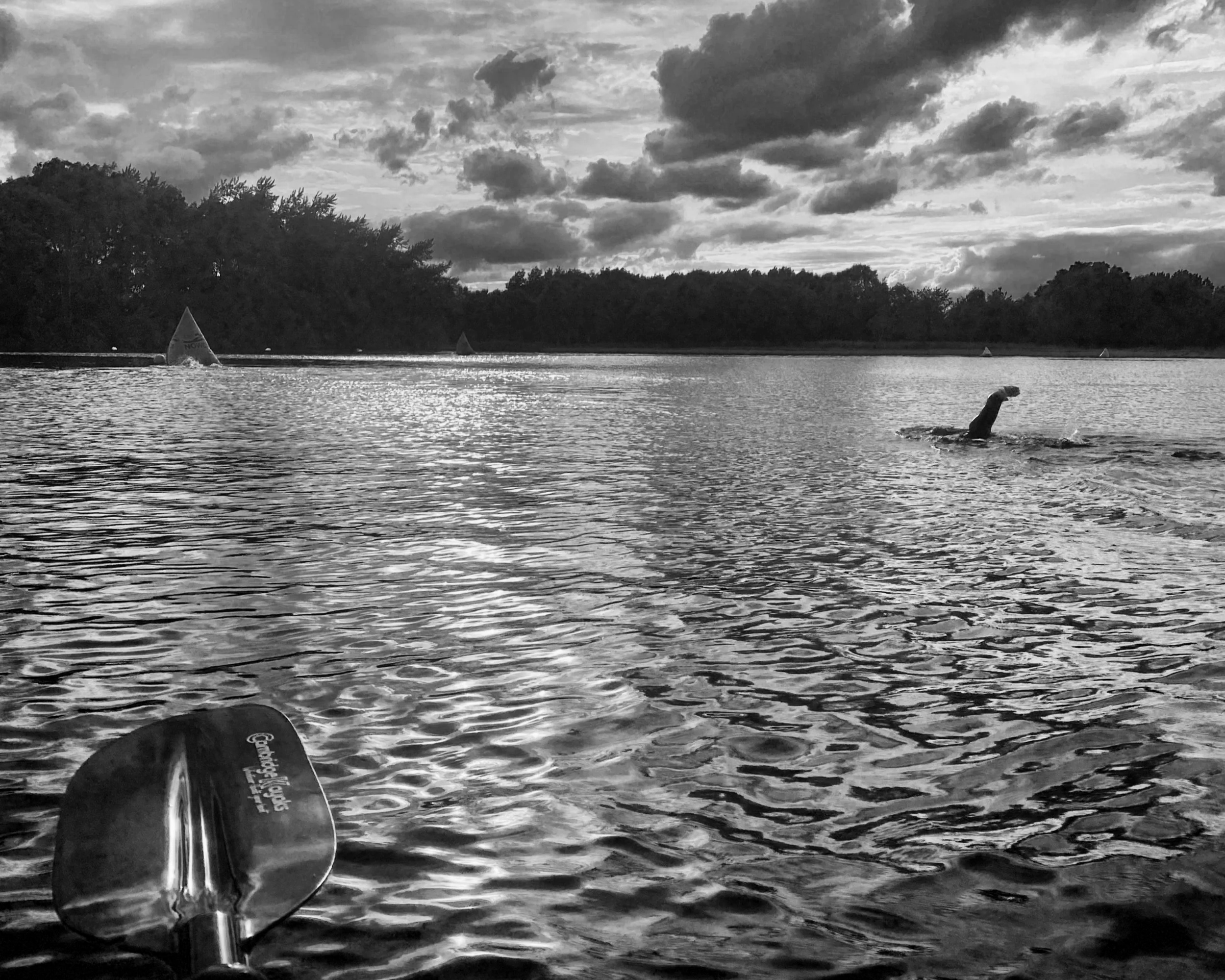
Small technical improvements can make a big difference in the water.
Why is swimming different?
Everyone will hit technical plateaus in the water. When you do, you might then add more volume, or more intensity, and progress a little. But while more technically proficient swimmers can and should lean more on building their fitness, what if your efficiency is the thing holding you back? Water punishes technical mistakes in a way that cycling and running don’t. We’ve all heard the “water is 800 times more dense than air” statement, and while that’s true, it’s hard to visualise.
Try this instead, imagine yourself sitting up on the bike and holding your arms wide (I said visualise, don’t actually do it). You’d slow down, right? Now imaging running down a lane in the pool in the same position. Even harder.
Beginner triathlete vs. GB swimmer.
We lived in Loughborough for a few years while my wife studied as a mature student, so I regularly swam at the university pool. What a place to swim; both motivating and humbling. One particular swim session sticks in my memory: the pool was divided into two 25m sides and one of the lanes in the side I was swimming in was taken up by a coach and a single swimmer. Both the coach and the swimmer were in GB kit and they had a camera and a tv screen for playback. The swimmer would perform a single length while being filmed, they would watch the video, talk about a single coaching point and repeat. For an hour.
At the other end of the scale, I had an athlete come to me about a year ago, who had just entered her first pool-based triathlon and was planning to use breaststroke for the swim. If she pushed herself in training, she could perform alternating lengths of front crawl and breaststroke. Would any coach in their right mind prescribe more volume to this athlete without first looking at technique? I doubt it. There is a sliding scale that runs all the way from this new triathlete up to that GB swimmer; at one end of the spectrum, swimming should be very technique orientated, and at the other, much of the coach’s focus will be on how best to prescribe volume and intensity to improve race fitness. But at no point does technical development stop; even the best in the world are trying to become more efficient.
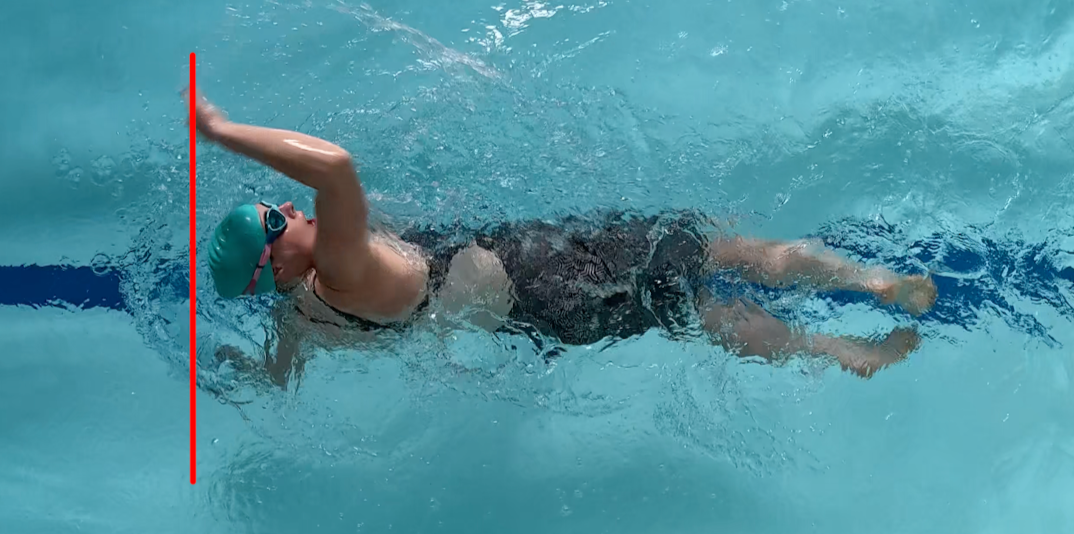
Video swim analysis is one of the best tools available to improve swim efficiency.
Are you a Tuna?
So, how do you know if you have an efficiency problem? Well, the first question to ask is, are you a tuna? I am going to continue writing under the assumption that you, like me, are not. But behind that dad joke lies some truth; most of us are making more drag than we need to. The easiest way for triathletes to know if there is a big fitness-efficiency mismatch in their swimming is to see how your swim compares to the other two sports. If you are generally fit and generally strong, but your swim performance lags a long way behind that of your bike and run, then it is likely down to efficiency. Similarly, if you are new to triathlon and your bike and run progress much faster than your swim, maybe there is an efficiency problem. Of course, that's not always the case, but it's a strong clue that technique deserves attention before simply swimming more.
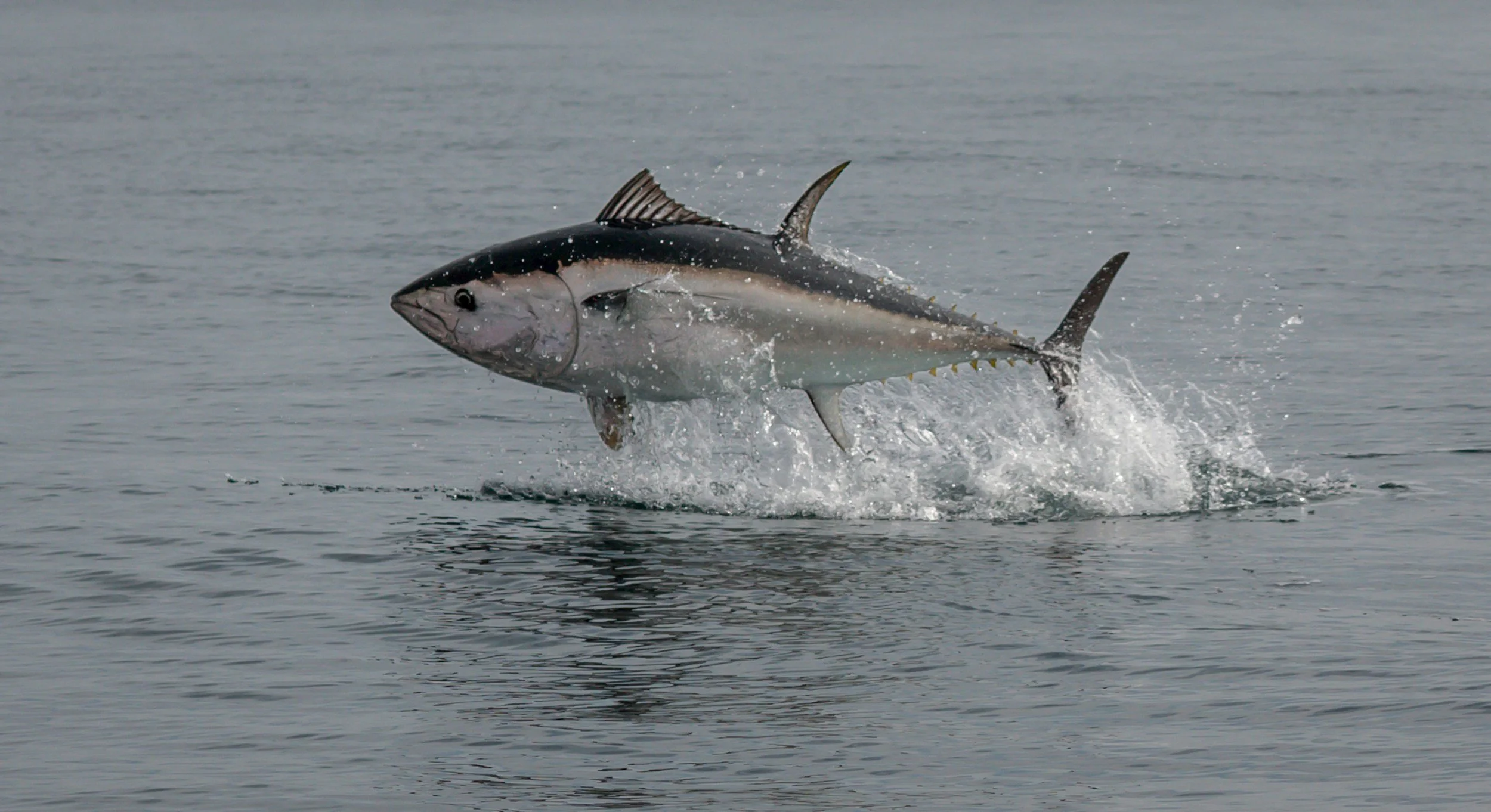
Tuna = very efficient.
All of these things and more are clues, but often the easiest thing is to have someone look at your swim stroke. It can be hard to know which of the countless “3 things that are killing your swim pace” videos you should watch, whereas having a knowledgeable coach look at your swim stroke can quickly give you direction in your training and a progression plan for your technique.
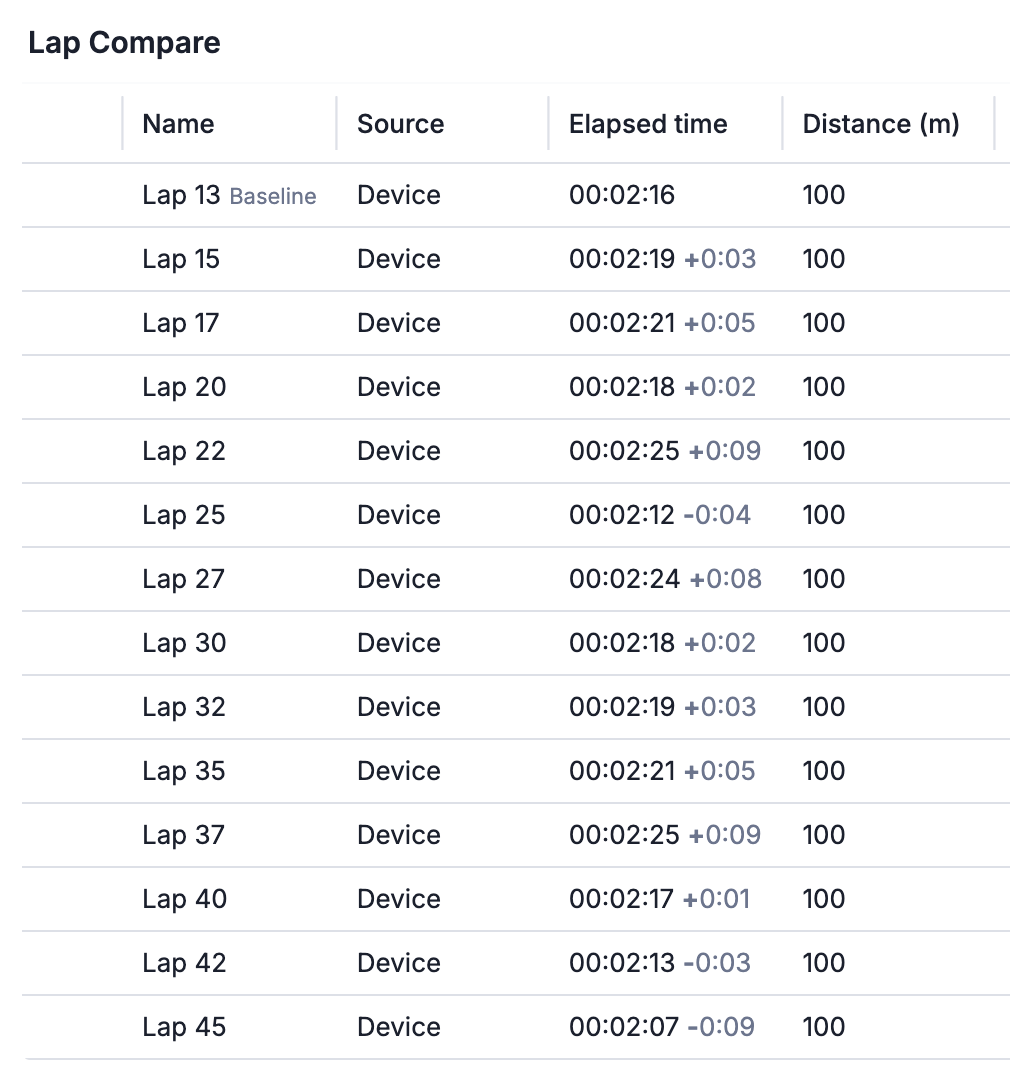
The triathlete mentioned above is now comfortably swimming freestyle for 60 min swim sessions and has multiple 70.3s under her belt. This table from TrainingPeaks shows data from a recent workout she completed. This was a set of 14 x 100m targeted around her CSS (critical swim speed) pace. The data shows that her pace was slowly dropping through the session as she was getting tired, until the final 3 reps start getting faster again. Could it just be that the end was in sight, or did something else happen? Her comment on the workout is a perfect summary of how swimming effort and efficiency interact; she said that she started struggling to hold the pace, so relaxed and just swam the last couple of reps easy…but they were faster! This triathlete has recently knocked five and a half minutes off her 70.3 swim time, after what was initially a very technique heavy approach and is now probably 50:50 technique:fitness work.
What should you do?
So, what should you do? Well, the answer might be slightly different depending on if you are a swimmer or a triathlete. In neither case am I saying that more swim fitness is bad, I am simply saying that it is worth identifying the limiter before you invest your hard-won time and energy.
Many triathletes (my younger self included) are often tempted to treat each sport individually, where in reality we are training for one event and have one bucket of energy to draw from. This is why I think you can afford to favour technique in your swim training in many circumstances, because that additional hard session in the pool might not be gaining you much if your problem is efficiency, but it will be taking energy away from other training sessions.
For swimmers (single-sport), then I am not advocating that you stop swimming hard. I think that hard swimming, and even sometimes paddle work, can actually teach mechanical awareness, or as my athletes might be sick of hearing me say “feel for the water”.
In either sport, if you feel like you’ve hit a plateau, before you add an additional weekly hard swim, ask yourself what the goal really is. Do you just want to be more tired? Or do you want to get faster? Because sometimes getting faster means getting more efficient first.
Remember the sliding scale from beginner to pro? If you plotted every swimmer on that journey, they would each need different things at different points. So, get your stroke looked at, don’t just keep working and hoping.
One final thought; a lesson drawn from the elite swimmer in Loughborough that I mentioned earlier: no one ever becomes too good to search for efficiency.
If you have questions, or a different perspective, I’d love to hear from you, so drop me an email. Likewise, if you’re wondering what is limiting you in the water, a video swim analysis is one of the fastest ways to find out, so let me know if you want to find out more.
Originally published July 2026. Updated periodically as my coaching and understanding evolve.